Hwaseok Senbei
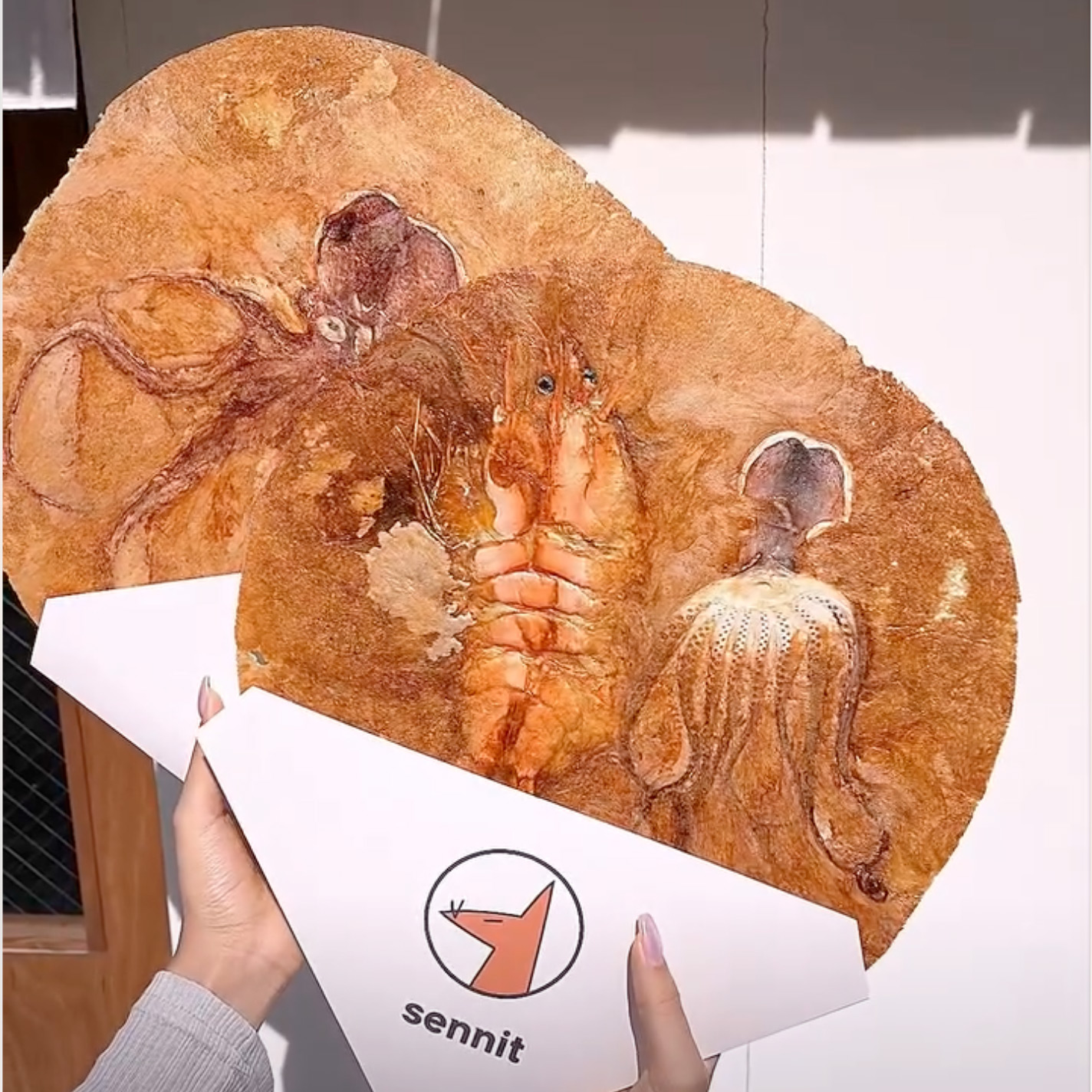
Photo: https://www.instagram.com/coffeegomi/
Hwaseok Senbei (화석과자, hwaseok gwaja, literally "fossil cracker") is a pressed seafood cracker found on Jeju Island, South Korea. Whole seafood, typically a large shrimp or small octopus, is placed on a pool of thin batter, then crushed flat by a 1-ton hydraulic press. The result is a massive, paper-thin disc with the seafood splayed out and embedded in it like a fossil imprint in stone.
The technique originates from Tokyo's famous press senbei shops, but Sennit (센잇), the main store on Jeju, has been making them for years. You can watch the whole process live: the batter is poured, the seafood arranged with tongs, and then the heavy press slams down, flattening everything into a single crispy wafer. The cracker is finished with a brush of salty-savory sauce while still warm.
The appeal is equal parts spectacle and snack. The crackers are huge (roughly the size of a dinner plate), shatteringly crispy, and taste like concentrated seafood. The shrimp version is the most popular, with the whole shrimp visible through the translucent cracker. At 7,800 won (about $6 USD) it's a popular takeout street snack in the old town of Jeju-si.
See also: Tako Senbei, the Japanese original from Enoshima.
Video: @coffeegomi on Instagram
Hwaseok Senbei (Pressed Seafood Cracker)
Ingredients (Makes 4 crackers)
For the Batter:
- Rice flour (or a mix of rice and tapioca flour) – 1 cup
- Water – 1 cup
- Salt – ½ teaspoon
- Potato starch – 2 tablespoons (for extra crispness)
For the Filling:
- Large whole shrimp – 4, shell-on, deveined
- Small octopus – or squid, cleaned (as an alternative to shrimp)
For the Sauce:
- Soy sauce – 2 tablespoons
- Mirin – 1 tablespoon
- Sugar – 1 teaspoon
Equipment
- The real thing uses a 1-ton hydraulic press. At home, you can approximate the effect with a tortilla press lined with parchment, or two heavy cast-iron pans (press down hard). The results won't be as dramatically thin, but the concept translates.
Instructions
Step 1: Prepare the Batter
- Whisk rice flour, potato starch, salt, and water together until smooth. The batter should be thin and pourable.
Step 2: Set Up the Press
- Heat your press plates (or cast-iron pans) until very hot. Brush both surfaces with oil.
- Pour a small ladleful of batter onto the bottom plate, spreading it into a rough circle.
Step 3: Add the Seafood
- Place the shrimp (or octopus) on the batter, arranging it so it will spread nicely when pressed. Use tongs to position antennae, legs, and tentacles for maximum fossil effect.
Step 4: Press
- Close the press and apply maximum pressure. Hold for 30 to 60 seconds. The batter and seafood will fuse into a single thin disc.
- Open the press carefully. The cracker should be golden and crispy. If using cast-iron pans, press down as hard as you can for a full minute.
Step 5: Finish
- Transfer the cracker to a wire rack. While still warm, brush with the soy-mirin-sugar sauce.
- Let cool briefly. The cracker will crisp up further as it cools. Serve whole or break into pieces.
Notes
The "fossil" name comes from the way the pressed seafood looks embedded in the translucent cracker, like a prehistoric specimen preserved in amber. The shop on Jeju (Sennit, 센잇, at 13 Gwandeok-ro 8-gil) is open 11:00 to 17:00, closed Wednesdays and Thursdays. Takeout only.
| Name_ | Hwaseok Senbei |
|---|---|
| Origin_ | 🇰🇷 South Korea |
| Morphology_ | ☰ Flat |
| Flavor_ | savory |
| Filling_ | whole shrimp, octopus, or other seafood |
| Topping_ | savory sauce |
| Recipe_ | Hwaseok Senbei Recipe |
| « All Pancakes_ | |